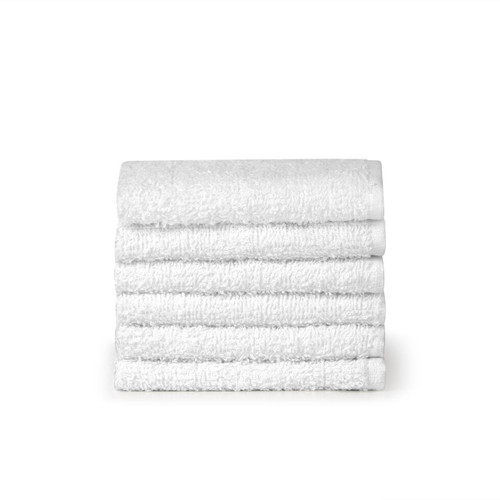


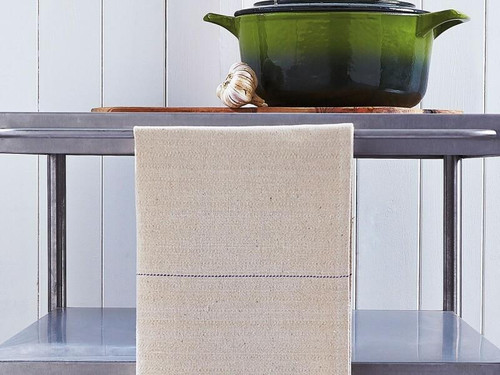



These unbleached cotton oven cloths are designed for professional kitchen use — thick enough to handle hot trays, oven dishes, and cookware safely, with a blue stripe identifier to distinguish them from other cloths in a busy kitchen. Made from natural unbleached cotton in the ecru colour associated with professional chef cloths, they're available from a single piece to a box of 480 with no minimum order and from just £0.35 per cloth.
Oven Cloths – Unbleached Cotton | Professional Chef Kitchen Cloths
In a commercial kitchen, grabbing the wrong cloth when pulling a tray from the oven isn't just inconvenient — it's a burn risk. An oven cloth is a specific, purposeful piece of kitchen linen: thick enough to insulate, dry enough to grip, and clearly identifiable so the right cloth is always to hand. These unbleached cotton oven cloths are built for exactly that job. The natural, unbleached cotton is the traditional professional choice — heavier weave than standard bleached cloths, handles repeated high-temperature use, and comes with a blue line identifier so there's no confusion on a busy station.
Key Features
-
Unbleached cotton — the natural ecru colour indicates an untreated heavy-duty weave suited to heat protection
-
Blue stripe identifier — clearly distinguishable from kitchen cloths, glass cloths, and waiter's cloths at a glance
-
Thick, absorbent construction — withstands oven, grill, and hob temperatures in a commercial kitchen environment
-
Quick-drying — recovers between uses during service without becoming permanently damp
-
From just £0.35 per cloth (ex. VAT) on larger pack sizes — excellent value for professional kitchen linen
-
Available from single to box of 480 — flexible for home cooks and bulk commercial buyers alike
-
No minimum order
Why Unbleached Cotton?
The difference between bleached and unbleached cotton matters for oven cloth use specifically. Bleached cotton has been chemically treated to achieve its white colour — over time, this treatment can weaken individual cotton fibres and reduce heat resistance under repeated high-temperature exposure. Unbleached cotton retains its natural fibre strength, making it more durable under the conditions an oven cloth faces daily: direct contact with hot metal trays, repeated high-temperature laundering, and sustained daily use in a busy kitchen.
The natural ecru or off-white colour of unbleached cotton is a recognisable professional marker. In a commercial kitchen, a cloth that's visibly unbleached signals that it's a heat-use cloth — the right one to reach for when you're pulling a full roasting tray from a 220°C oven.
The Blue Line Identifier
A thin blue line runs along the length of these cloths — not for decoration, but for quick identification. In a busy kitchen where multiple cloth types are in circulation simultaneously, the blue line means a chef can reach for the oven cloth without looking twice or picking up a glass cloth by mistake. It's a small detail that reflects how professional kitchen linen is actually used under pressure.
Heat Protection — How It Works
A good oven cloth does three things: insulates hands from the heat of a hot tray or dish, provides a secure non-slip grip, and remains dry enough to do both effectively. A wet cloth transmits heat rapidly — which is why rotating through a supply of clean, dry oven cloths through a service is important, rather than relying on one cloth all evening.
These cloths are suitable for handling oven trays, roasting tins, heavy pans, and hot dishes at the pass. The unbleached cotton construction becomes slightly more dense and absorbent after the first few washes as the natural fibres settle — a characteristic of quality unbleached cotton that professional kitchen buyers recognise.
Oven Cloth vs. Oven Glove
Oven gloves offer specific hand protection and are useful for removing dishes at awkward angles. Oven cloths offer more versatility — they can be folded to any thickness, laid flat to protect a surface, or used to grip large flat trays that are difficult with fixed gloves. Most professional kitchens use cloths rather than gloves because they're faster to grab, easier to clean, and more adaptable to different kitchen tasks. Many domestic cooks — particularly those with range cookers or who bake regularly — prefer the flexibility of a proper oven cloth for the same reasons.
Who Uses These?
-
Restaurant and hotel kitchens — A station essential; every chef needs a dedicated oven cloth within reach throughout service
-
Bakeries and patisseries — High-frequency oven use throughout the day demands a dedicated, reliable cloth in constant rotation
-
Care home and hospital catering — Suitable for high-temperature institutional laundering; trusted in healthcare catering environments across the UK
-
School and university catering — Large-scale food production environments where volume and reliability both matter
-
Home kitchens — Particularly for range cooker owners, serious bakers, and cooks who find oven mitts too bulky or limited for practical kitchen use
-
Catering and events companies — Bulk pricing with no minimum makes stocking for large-scale events straightforward
For front-of-house service cloths, see our Waiter’s Cloths – Cotton. For general kitchen drying and wiping, browse our Herringbone Kitchen Cloths.
Buying Guidance
For a home kitchen or small operation, a pack of 4 or 8 provides enough rotation for daily use. For a restaurant kitchen, boxes of 120 or 240 ensure there are always clean, dry cloths available through service while others are in the laundry. The box of 480 suits larger operations, contract caterers, or anyone managing kitchen linen across multiple sites or regular high-volume events.
Care Instructions
-
Machine washable at 60°C for standard use; 90°C suitable for commercial hygiene requirements
-
Do not use fabric softener — reduces heat resistance and absorbency over time
-
Tumble dry or air dry — ensure the cloth is fully dry before use as a heat protector
-
Never use a damp or wet oven cloth to handle hot items — moisture transmits heat rapidly and provides no insulation. This is a basic kitchen safety rule
-
The cloth becomes more absorbent and slightly denser after the first few washes as the natural cotton fibres settle — this is normal and desirable
-
Replace cloths that have become thin, permanently stained, or worn — a degraded cloth is a safety concern as well as a hygiene issue
Product Specifications
|
Specification |
Detail |
|
Material |
Unbleached cotton — natural / ecru colour |
|
Identifier |
Blue stripe / blue line |
|
Primary Purpose |
Heat protection — handling oven trays, cookware, and hot kitchen equipment |
|
Pack Sizes |
Single, Pack of 4, Pack of 8, Box of 120, Box of 240, Box of 480 |
|
Minimum Order |
None — buy from a single cloth |
|
Price From |
£0.35 per cloth ex. VAT (larger pack sizes) |
|
Wash Temperature |
Up to 90°C |
|
Suitable For |
Restaurants, bakeries, care homes, schools, catering, home kitchens |
Complete your kitchen setup with our Printed Glass Cloths for glassware and cutlery polishing, explore the Essential Kitchen Pack, or browse the Full Kitchen Linen Range for more professional kitchen essentials.
FAQs
Q: What is an oven cloth used for?
An oven cloth is a thick cotton cloth for handling hot cookware safely in a kitchen. Common uses include removing hot trays from the oven, gripping hot pans on the hob, protecting surfaces from hot dishes, and handling cookware at the restaurant pass during service.
Q: Why are professional oven cloths made from unbleached cotton?
Unbleached cotton retains its natural fibre strength because it hasn't been chemically treated. This makes it more durable under repeated heat exposure and high-temperature laundering — qualities that matter specifically in oven and heat protection applications. The natural ecru colour also serves as a visual identifier in professional kitchens.
Q: Can I use a damp oven cloth to handle hot items?
No — this is a kitchen safety essential. A damp or wet cloth transfers heat very rapidly and provides almost no insulation. Always use a clean, fully dry oven cloth when handling hot trays or dishes.
Q: How is an oven cloth different from a tea towel or kitchen cloth?
An oven cloth is made from unbleached, heavier-weight cotton specifically for heat resistance. It's thicker and more robust than a standard tea towel or herringbone kitchen cloth. In a professional kitchen, each cloth type has a specific purpose — the oven cloth is for heat protection, not drying or polishing.
Q: Are oven cloths better than oven gloves for professional kitchens?
Most professional kitchens prefer cloths — they're more versatile, foldable to any thickness, easier to clean, and faster to grab during service. Oven gloves are useful for specific awkward angles. Many kitchens keep both, but the oven cloth is the standard professional choice.
Q: Is there a minimum order?
No — buy a single cloth or a box of 480. Small packs are available for home kitchens or operations trialling the product before committing to bulk quantities.